How Wide Is a Golf Cart? Standard Width, Dimensions and Fit Guide
Reading time: 16 minutes

Share
A standard golf cart is usually about 47 to 49 inches wide, with 48 inches being the easiest number to remember. That is roughly 4 feet wide. But if you are asking how wide is a standard golf cart? Because you need to fit one into a garage, trailer, shed, storage unit, narrow gate, or neighborhood path, the real answer needs a little more care.
The actual golf car width depends on the brand, seat layout, tires, wheels, lift kit, mirrors, fenders, and accessories. For example, the Club Car Onward 2 Passenger has an official overall width of 48.75 inches, while the Yamaha Drive2 PTV lists an overall width of 47.3 inches. Both sit close to the common 48-inch reference point, but that small difference can matter when you are loading a cart onto a trailer ramp or squeezing it through a tight gate.
Quick Answer: How Wide Is a Standard Golf Cart?
Most standard golf carts are about 47–49 inches wide. If you are making a quick estimate, you can think of the average golf cart width as about 48 inches.
That number usually applies to a standard 2-seater golf cart used on a golf course, around a neighborhood, or on private property. Once you move into 4-seater, 6-seater, lifted, off-road, or utility models, the width may stay close to that range, but the total space needed can change quickly because of extra length, roof height, tire width, and accessories.
Common Golf Cart Width by Type
| Golf Cart Type | Typical Width | What It Usually Means for Fit |
|---|---|---|
| Standard 2-seater golf cart | 47–49 in | Fits most garages, trailers, and golf paths more easily |
| 4-seater golf cart | 48–50 in | Usually similar width, but noticeably longer |
| 6-seater golf cart | 49–52 in | Needs more parking, turning, and trailer space |
| Lifted golf cart | 50+ in | Tires, wheels, and suspension may add width |
| Off-road golf cart | 50+ in | Wider tires and fenders can affect gate or trailer fit |
| Utility golf cart | 50+ in | Cargo beds or work accessories may increase total width |
The main takeaway is simple, the standard golf cart width gives you a starting point, not a final measurement. Before buying, storing, or trailering a cart, check the actual dimensions of golf cart models you are considering.


Why Golf Cart Width Matters for Real Use
Golf cart dimensions are not just numbers on a spec sheet. Width affects how the cart behaves and where you can actually use it.
A cart that looks compact in a showroom may feel much larger when you are backing it into a shed, turning through a campground lane, or loading it onto a narrow trailer ramp. That is why width should be checked together with golf cart length, roof height, tire size, and total storage space.
Here are the real-world reasons golf cart width matters:
- Garage fit: A 48-inch-wide cart may fit through many garage doors, but you still need room to walk around it, charge it, and avoid scraping the side panels.
- Trailer fit: Golf cart trailer size depends on more than length. The trailer bed, ramp, and tie-down area must be wide enough for the tires and accessories.
- Path clearance: If you drive through gates, trails, sidewalks, or resort paths, the narrowest point of the route matters more than the average path width.
- Stability: A wider stance can help a cart feel more settled during turns or on uneven terrain, especially when passengers are onboard.
- Maneuverability: More width can make the cart less forgiving in tight spaces. A narrow path, storage unit doorway, or fence gate can become a problem.
- Passenger comfort: Wider carts may provide more seating room, but seat layout and body design matter too. A wider cart is not automatically more comfortable.
If you are trying to understand how big is a golf cart, do not stop at width. You should also check the length of a golf cart, the height of a golf cart with the roof installed, and the full storage footprint.
Golf Cart Width by Seating Capacity
Seat count is one of the first things buyers compare. It affects the size of a golf cart, but not always in the way people expect. Moving from a 2-seater to a 4-seater usually changes the golf cart length more than the width. A 6-seater, especially a lifted one, often needs more attention because the total footprint becomes much larger.
2-Seater Golf Cart Width
A standard 2-seater golf cart is usually about 47–49 inches wide. This is the most common size for golf course use, personal transportation, and neighborhood driving.
A 2-seater works well when you need a cart that is easier to store, easier to load, and easier to move through tight paths. If your biggest concerns are garage fit, trailer loading, or a narrow gate, this is usually the easiest category to work with.
For reference, Club Car lists the Onward 2 Passenger at 48.75 inches wide, while Yamaha lists the Drive2 PTV at 47.3 inches wide. These are good examples of standard golf cart dimensions from major brands.
4-Seater Golf Cart Width
A 4-seater golf cart is often around 48–50 inches wide, depending on the model and accessories. The width may stay close to a 2-seater, but the cart is usually longer because of the rear seat.
This matters when you are parking in a garage or loading onto a trailer. The cart may pass through the same doorway as a 2-seater, but you may need more room front to back. That is why people searching how long are golf carts or how long is a standard golf cart are usually trying to solve the same fit problem from another angle.
A 4-seater is a better match if you often carry family members, guests, or gear. Just check rear armrests, footrests, and grab bars. Those parts may stick out farther than the body.
6-Seater Golf Cart Width
A 6-seater golf cart may be about 49–52 inches wide, especially if it is lifted or fitted with larger tires. The bigger issue, though, is usually total footprint. A 6-seater is much longer, harder to turn in tight spaces, and more demanding to store.
This style makes sense for resorts, campgrounds, large properties, community transport, and shuttle use. But before buying one, measure the parking area, trailer bed, storage space, and turning path. A cart that fits in a straight line may still be awkward when you need to turn it into a garage or back it onto a trailer.
Golf Cart Dimensions by Major Brand
Brand-specific searches are common because shoppers often compare Club Car, EZGO, and Yamaha before buying. If you are looking up Club Car golf cart width, Yamaha golf cart width, EZGO golf cart dimensions, or EZGO golf cart size, always check the official model page or dealer spec sheet.
Major Brand Golf Cart Width Examples
| Brand / Model | Official or Common Width | Useful Fit Note |
|---|---|---|
| Club Car Onward 2 Passenger | 48.75 in | Close to the standard 48-inch reference point |
| Yamaha Drive2 PTV | 47.3 in | Slightly narrower than many standard personal carts |
| E-Z-GO RXV 2 | Commonly listed around 47 in | Check the specific model year and trim before buying |
| Club Car 4-seater models | Often around 49 in | Rear seat affects length more than width |
| Lifted/custom models | Often 50+ in | Tires and wheel offset can change real outside width |
These numbers show why standard golf cart dimensions should be treated as a guide. A difference of 1 or 2 inches may not matter on an open golf course, but it can matter when you are fitting the cart into a storage shed, trailer, or narrow side yard.
Electric vs Gas Golf Cart Width
Electric and gas golf carts can be similar in width, especially when they share the same body platform. In many cases, the power type is less important than the brand, model, seat layout, tires, and accessories.
That said, some electric golf carts may be slightly narrower than comparable gas models because they do not need the same engine layout. But you should not assume this. A lifted electric cart with wide tires can easily be wider than a standard gas cart.
When comparing electric vs gas golf cart size, check these items first:
- Model platform: The same body platform may have nearly identical dimensions whether it is gas or electric.
- Battery or engine layout: Powertrain design can affect internal packaging, but not always the exterior width.
- Tire package: Tire size and wheel offset often change real width more than the powertrain does.
- Accessories: Mirrors, fenders, cargo boxes, and rear seats can add more practical width than the body spec suggests.
If storage space is tight, do not buy based on electric or gas alone. Measure the actual cart or read the exact manufacturer dimensions.
Will a Golf Cart Fit in a Garage, Trailer or Storage Space?
This is where golf cart dimensions become practical. You are not just asking how wide golf carts are. You are really asking, Will this specific cart fit where I need it to go?
Golf Cart Garage Fit
A standard golf cart can fit in many residential garages, but you need to measure more than the door opening. Check the garage door width, interior wall clearance, roof height, and the space around shelves, tools, bikes, or a parked car.
A cart that is 48 inches wide may technically fit through a 60-inch opening, but that does not leave much room for steering mistakes. Add side mirrors or fender flares, and the fit gets tighter.
For garage planning, measure:
- Door opening: Use the clear opening, not the outside trim.
- Interior width: Make sure the cart can sit inside without blocking other items.
- Roof height: A cart with a canopy may be around 70 inches tall or more.
- Charging access: Leave room near the battery area and charger outlet.
Golf Cart Trailer Fit
Golf cart trailer size depends on width, length, ramp width, and tie-down access. A standard 2-seater is easier to haul than a 4-seater or 6-seater because it takes up less deck space.
Before loading, check:
- Trailer bed width: It must fit the outside tire width, not just the body.
- Ramp width: The ramp should match the wheel path with room for small steering corrections.
- Tie-down points: You need side space to secure the cart safely.
- Roof height: A tall cart can create clearance issues in enclosed trailers.
A lifted or off-road cart needs extra attention. Off-road golf cart width can increase because of wider tires, wheel spacers, and fender flares.
Golf Cart Storage Fit
If you plan to store your cart in a shed, storage unit, barn, or RV campground space, measure the full entry path. A cart may fit inside the unit but still be hard to turn through the doorway.
For seasonal storage, leave enough room to check tire pressure, connect a charger, inspect cables, and clean around the battery area. If you use lead-acid batteries, you may need more access for maintenance. If you use lithium, the maintenance need is lower, but you still want space to inspect wiring and mounting points.
Gate, Pathway, and Trail Clearance
A golf cart that fits on a golf course path may not fit through your backyard gate. Measure the narrowest point of the route you actually use. Check:
- Fence gates
- Side yards
- Campground paths
- Trail entrances
- Community lanes
- Storage unit drive aisles
Also think about turns. Straight clearance is one thing. Turning clearance is different. If the cart has a long wheelbase, rear seat, or cargo platform, it may need more room than the width alone suggests.
What Affects Golf Cart Width?
The width of a golf cart is shaped by several design and setup choices. Some are built into the model. Others come from upgrades added later.
Make and Model
Different brands use different frames, body panels, and suspension layouts. Even within the same brand, a personal cart, fleet cart, lifted cart, and utility cart may have different dimensions.
That is why searches like club car dimensions golf cart, and EZGO golf cart dimensions should always be tied to a specific model year and trim.
Seating Configuration
A 2-seater, 4-seater, and 6-seater may have similar width, but the total footprint changes. More seats usually mean more golf cart length, more turning space, and more trailer space.
Tires, Wheels, and Wheel Offset
Tires and wheels can change the true outside width. Wider tires, custom wheels, and wheel spacers can push the wheels outward.
This is one of the most common reasons a modified cart no longer fits the same trailer or storage space.
Lift Kits and Suspension
A lift kit mainly raises the cart, but it often comes with larger tires or a wider stance. That can change both the height of a golf cart and its actual width.
If you buy a lifted cart, do not rely on stock dimensions. Measure the real vehicle.
Mirrors, Fenders, Armrests, and Accessories
Side mirrors, fender flares, rear armrests, roof supports, baskets, coolers, and cargo boxes can all stick out beyond the standard body line.
When measuring, include anything that stays on the cart during daily use.
Custom and Utility Configurations
Utility carts and work carts may include cargo beds, tool racks, or hauling equipment. These can increase the size of a golf cart beyond standard personal models.
That extra size may be useful for property work, but it can create problems with standard golf cart paths, small trailers, and tight storage areas.
How to Measure Golf Cart Width Correctly
Measuring golf cart width is simple, but you need to measure the right points.
Use a tape measure and park the cart on a flat surface. Keep the front wheels straight. Then measure across the widest part of the cart.
Follow these steps:
- Park on level ground: A flat surface gives you a cleaner measurement and keeps the tires straight.
- Straighten the wheels: Turned front wheels can make the tire-to-tire measurement inaccurate.
- Measure outside tire to outside tire: This is often the most important width for trailers, ramps, and gates.
- Check body panels and fenders: Some carts have fenders or bodywork that extend past the tires.
- Include mirrors and accessories: If mirrors, armrests, baskets, or fender flares stay installed, count them.
- Record length, height, and width together: Width alone does not tell you whether the cart fits in a trailer, garage, or storage unit.
Tips: If your cart has larger tires, custom wheels, a lift kit, wheel spacers, or off-road accessories, do not rely on the original factory spec. Measure the actual cart as it sits today.
How Much Clearance Should You Leave Around a Golf Cart?
You do not want a 48-inch-wide golf cart going through a 48-inch opening. That is how scratches, bent mirrors, and awkward loading happen.
Give yourself extra room wherever the cart needs to move, turn, park, or charge.
Clearance Planning by Use Case
| Use Case | What to Measure | Practical Reason |
|---|---|---|
| Garage | Door opening, side space, roof height | Prevent scraping and leave room to walk around |
| Trailer | Bed width, ramp width, tie-down room | Safer loading and better strap access |
| Shed or storage unit | Door opening, floor space, turning room | Easier entry, exit, and seasonal storage |
| Gate or pathway | Narrowest point and turn angle | Avoid getting stuck at tight spots |
| Lifted golf cart | Tire width and roof height | Modified carts need more room in every direction |
A little extra clearance makes daily use easier. It also protects the cart’s paint, mirrors, tires, roof supports, and accessories from constant rubbing or impact.
Does Golf Cart Width Matter When Upgrading Batteries?
A battery upgrade usually does not change the outside width of your golf cart. But it can change how the cart feels, how it handles weight, and how easy it is to maintain.
This is where battery planning matters. A lead-acid battery pack is heavy and often requires regular watering, cleaning, and terminal maintenance. A LiFePO4 lithium battery setup is usually lighter, charges faster with the right charger, and needs far less routine maintenance.
Before upgrading, check:
- Battery compartment size: Make sure the lithium battery fits the tray or mounting area.
- System voltage: Confirm whether your cart uses a 36V, 48V, or 72V system.
- Charger compatibility: Lithium batteries need a compatible lithium charger.
- Cable routing: Wires should fit cleanly without rubbing against metal edges or moving parts.
- Weight change: A lighter battery pack can affect ride feel, suspension load, and range.
- Monitoring access: Bluetooth or LCD monitoring makes it easier to check battery status without guessing.
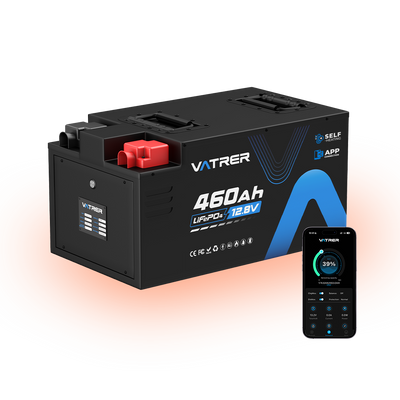
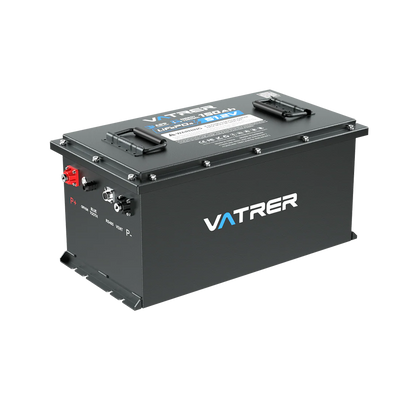
For golf cart owners planning a lithium conversion, Vatrer offers 36V, 48V, and 72V lithium golf cart battery options. It has built-in smart BMS safety protection, low-temperature protection, and Bluetooth monitoring. For example, the Vatrer 48V 105Ah lithium golf cart battery with 5376Wh capacity, up to 50 miles of range, 200A BMS protection, about 5-hour charging, LCD and app monitoring, and a plug-and-play conversion kit.
So while lithium will not make your cart wider, it can be part of the same upgrade checklist. If you are already measuring golf cart dimensions for storage, trailering, or modification, it is smart to check battery fit, voltage, and charger compatibility at the same time.
Golf Cart Width Checklist Before Buying, Storing or Trailering
Use this checklist before you buy a cart, rent storage, order a trailer, or start a modification project.
- Confirm the exact model: Model year, trim, seating capacity, and power type can affect dimensions.
- Check official specs: Look for width, golf cart length, roof height, wheelbase, and ground clearance.
- Measure the actual cart: Include tires, mirrors, fenders, armrests, roof supports, and accessories.
- Measure your garage: Check the door opening, interior space, roof clearance, and charger location.
- Measure your trailer: Check bed width, ramp width, loading angle, and tie-down access.
- Check storage access: Measure shed doors, storage unit doors, turn-in space, and floor depth.
- Measure your narrowest route: Gates, paths, trails, and campground lanes can be tighter than expected.
- Recheck after modifications: Lift kits, wheels, fender flares, and cargo accessories can change the final width.
- Plan battery upgrades early: Confirm voltage, battery compartment size, charger compatibility, and total weight change before buying a lithium battery kit.
FAQs About Golf Cart Width
What is the average size of a golf cart?
The average size of a golf cart depends on seating capacity. A standard 2-seater is often about 47–49 inches wide, around 90–95 inches long, and about 70 inches tall with a roof, depending on model.
How long is a standard golf cart?
Many standard 2-seater golf carts are around 90–95 inches long. For example, Club Car lists the Onward 2 Passenger at 91.5 inches long, and Yamaha lists the Drive2 PTV at 93.6 inches long.
Are electric golf carts narrower than gas golf carts?
Sometimes, but not always. The specific brand, model, seat layout, wheel setup, and accessories usually matter more than whether the cart is electric or gas.
What size trailer do I need for a golf cart?
It depends on the cart’s width, length, roof height, and whether it is lifted or modified. Measure trailer bed width, ramp width, and tie-down space before loading.
Does a lithium battery upgrade change golf cart width?
No. A lithium battery upgrade usually does not change exterior golf car width. It can affect weight, battery compartment layout, charging setup, range, and overall driving feel.
Conclusion
Most standard golf carts are about 47–49 inches wide, and 48 inches is a useful quick reference. But the number that matters most is the actual widest point of the cart you plan to buy, store, tow, or upgrade.
Check the official specs first. Then measure the cart yourself, especially if it has larger tires, mirrors, fenders, a lift kit, rear seat accessories, or cargo equipment. Compare that real measurement with your garage door, trailer bed, ramp, gate, storage unit, and daily driving paths.
And if your fit check is part of a bigger golf cart upgrade, look beyond width. Battery compartment size, voltage, charger compatibility, and battery weight all affect how well the cart works after the upgrade. Vatrer lithium golf cart battery conversion kits give you practical options for common 36V, 48V, and 72V setups, with features like BMS protection, Bluetooth monitoring, low-temperature protection, and compatible charging support for everyday golf cart use.


Share