What Does RV Battery Size Mean? Full Guide
Reading time: 10 minutes

Share
You don’t usually think about your RV battery until something feels off. The fridge cycles less. Lights dim earlier than expected. You start wondering if your battery is too small. Then you look online and see terms like "RV battery size," "group 24," "100 Ah," and "lithium." It gets confusing fast.
So what does RV battery size mean in real use? It’s not just one number. It’s a mix of physical dimensions, energy capacity, and how much power you can actually use. Once you understand that, your whole RV electrical system setup starts to make more sense.
What Does RV Battery Size Mean?
When people talk about RV battery size, they often mean different things. That’s where the confusion starts. In real use, size is not a single metric. It is a combination of how the battery fits, how much energy it stores, and how long it can run your system. If you only look at one part, you will likely choose the wrong setup.
- Physical Size (Group Size): This refers to the outer dimensions of the battery case. It determines whether the battery fits your RV tray or battery compartment. It does not directly tell you how long the battery will last during use.
- Capacity (Ah): Amp-hours show how much current the battery can deliver over time. A higher Ah rating usually means longer runtime. But it still depends on voltage and how deeply you discharge the battery.
- Energy (Wh): Watt-hours give you the full picture of usable energy. This is the most practical way to estimate runtime. When comparing options, Wh is what actually connects battery size to real usage.


Understanding RV Battery Group Size
RV battery group size is about physical dimensions and fitment. It tells you whether the battery will physically fit into your RV battery compartment.
Common RV Battery Group Sizes and Dimensions
| Group Size | Dimensions (inches) | Typical Use |
|---|---|---|
| Group 24 | 10.25 x 6.8 x 8.9 | Small RV setups |
| Group 27 | 12 x 6.8 x 9.0 | Mid-size RV use |
| Group 31 | 13 x 6.8 x 9.4 | Higher demand setups |
Group size helps you install the battery. It does not define performance. If you are comparing group 24 vs group 27 RV battery, the difference is mainly length and internal capacity. Group 27 is longer. That usually means more battery material inside, which often translates to more capacity.
But not always. Lithium RV batteries can fit into the same group size and still provide much higher usable energy. So RV battery dimensions and fitment matter, but they are only the starting point.
In fact, lithium batteries are typically 50%–70% lighter than lead-acid equivalents, which makes installation easier and reduces total RV weight.
Understanding RV Battery Capacity Size
Most batteries are labeled in amp-hours. You will see 100Ah, 200Ah, and so on. That tells you how much current the battery can supply over time. A better way to understand RV battery capacity is in watt-hours.
Here’s a simple example, 12V nominal voltage is 12.8V:
- 12V 100Ah battery = 1280Wh
- 12V 200Ah battery = 2560Wh
That number tells you how long your appliances can run. A 60W fridge running for 10 hours uses about 600Wh. Now you can start matching battery size to real usage.
However, real systems are not 100% efficient. Inverter and wiring losses typically reduce usable energy by 10%–20%, so actual usable energy is:
- Real usable Wh ≈ Rated Wh × 0.8–0.9
This is where RV battery capacity vs size explained becomes practical. Size alone does not tell runtime. Energy does.
Another critical factor is discharge rate (C-rate). For example:
- A 100Ah battery at 1C = 100A output
- At 0.5C = 50A output
High-power devices require higher discharge capability, not just higher capacity.
Usable Capacity vs Rated Capacity
This is one of the biggest gaps between what you think you have and what you actually get.
Usable Capacity Comparison
| Battery Type | Rated Capacity | Usable Capacity |
|---|---|---|
| Lead-acid | 100Ah | ~50Ah |
| Lithium | 100Ah | ~90 to 100Ah |
Lead-acid batteries should only be used to about 50 percent if you want them to last. Lithium batteries can safely go much deeper.
This is not a hard cutoff, but a lifespan optimization rule. Frequent deep discharge can lead to sulfation and significantly shorten battery life.
So even if two batteries look the same on paper, their usable capacity vs rated capacity is very different.
This is why many RV owners upgrade. A single 12V 100Ah lithium battery can replace what used to require two lead-acid batteries. Less weight. Less space. More usable power.
However, while lithium supports deeper discharge, consistently using 100% depth of discharge may still slightly reduce long-term cycle life, so moderate usage ranges can extend lifespan further.
How Battery Size Affects Real RV Use
You might have a battery that looks “big enough" but still run into power issues. That usually means you are only looking at one part of the size, not the full picture. In real use, battery size affects your RV through three key dimensions working together.
Physical Size (Fitment and Expansion)
Your RV battery group size decides what you can physically install. A smaller compartment limits how much capacity you can add. If you are running a tight battery tray, upgrading later becomes harder. This is why RV battery dimensions and fitment should always be checked first before thinking about capacity.
Capacity (Ah and Power Delivery)
Ah affects how much current your system can supply over time. Higher capacity helps support more devices at once.
If capacity is too low, voltage sag under load becomes more noticeable, which can cause inverters or appliances to shut down early.
Energy (Wh and Runtime)
This is what actually determines how long your RV can run without charging.
It also defines whether your system can survive overnight usage without dropping below safe voltage levels.
Another critical factor is surge load handling. Appliances like refrigerators or air conditioners can draw 2–3× their rated power at startup, so your battery must support peak current, not just average load.
If you are a weekend camper, a smaller setup may be enough. But if you are running off-grid for multiple days, you need to look beyond Ah and focus on total usable energy.
That is why the best RV battery size for boondocking is usually defined in Wh, not just Ah.
Typical sizing guidelines based on real use:
- Light use (lights, phone charging): 100–200Ah
- Moderate use (fridge + fan): 200–300Ah
- Full off-grid living: 300–600Ah
How to Choose the Right RV Battery Size
Choosing the right RV battery size is not about picking the biggest number you can afford. It is about matching the battery to how you actually use your RV. Some setups only need to power lights and a fan for a few hours. Others run a fridge, inverter, and multiple devices all day.
If you skip this step and guess, you either run out of power too early or carry extra weight you never use.
Step 1: Identify Your Power Needs
Start by listing what you use in a normal day. A 12V fridge, fan, lights, maybe a water pump. Estimate how many hours each runs. Convert that into watt-hours so you can see your real daily consumption.
Step 2: Match Battery Capacity
Once you know your daily usage, choose a battery that covers it with extra margin. Around 20 to 30 percent buffer is a good starting point. This prevents deep discharge every night and extends battery life.
Step 3: Check Fitment and Space
Look at your RV battery dimensions and fitment carefully. Measure your battery tray. Check cable reach and mounting points. Even the right capacity won’t work if installation becomes an issue.
Step 4: Match Battery RV Power System
In real RV setups, the battery does not operate alone. It needs to match your inverter power rating, your maximum discharge capability, and how your system is charged, whether through shore power, DC-DC charging, or solar. A mismatch here can lead to issues like inverter shutdowns, limited performance under load, or inefficient charging.
Step 5: Consider Charging Speed
Charging time depends on both your battery capacity and your charger output. A larger battery takes longer to recharge, but lithium batteries typically support higher charging currents, which helps reduce downtime. In practical use, this determines whether your battery can fully recover during a few hours of driving or solar input, or whether you slowly lose capacity day by day during off-grid use.
Step 6: Consider Lithium Upgrade
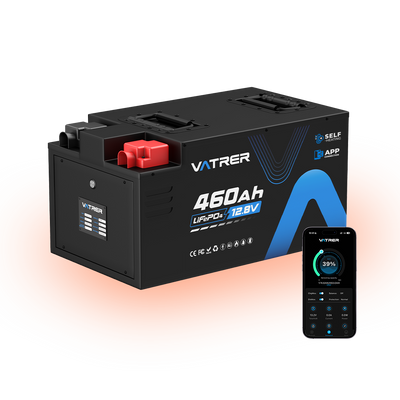
If you want more usable energy without increasing size, lithium is a practical upgrade. Higher efficiency, faster charging, and stable output make daily use easier. Many Vatrer lithium battery models are built to fit standard RV battery size compartments while delivering more real power.
Common Mistakes When Choosing RV Battery Size
Many RV owners run into the same issues, especially when they rely only on labels instead of real usage. Battery size looks simple on paper, but small misunderstandings can lead to poor performance. Knowing these common mistakes helps you avoid frustration and build a more balanced system.
Only Looking at Ah
Ah numbers are easy to compare, but they don’t show the full picture. Without considering voltage and watt-hours, you can misjudge how long the battery will actually last in real use.
Lgnoring Usable Capacity
A 100Ah lead-acid battery does not give you 100Ah of usable energy. If you ignore this, your system may feel underpowered even when it looks correctly sized.
Overlooking Fitment
Physical size still matters. If the battery does not fit your RV battery compartment properly, installation becomes difficult or unsafe. Always check dimensions first.
Oversizing or Undersizing
Too small and you run out of power quickly. Too large and you add unnecessary weight and cost. The goal is balance based on your real usage.
Tips: Always calculate your daily energy use before choosing battery size. It removes guesswork and helps you avoid these common issues.
Conclusion
RV battery size is not just about how big the battery looks. It is about how much energy you can store, how much you can use, and how well it fits into your system.
Once you start thinking in terms of usable energy instead of just size labels, your decisions become clearer. You stop guessing and start matching your battery to your real needs.
If you are upgrading or building a new RV setup, Vatrer Power makes this process simpler. Higher usable capacity, lighter weight, and longer life all work together to give you a more stable and predictable power system.
That means fewer surprises at night and more confidence every time you head off-grid.
FAQs
What Is The Most Common RV Battery Size?
Group 24 and Group 27 are the most common RV battery group size options because they fit most standard battery trays. In terms of capacity, many RV owners today start with 100Ah lithium, since it offers a good balance between size, weight, and usable energy.
What Size Battery Do I Need For My RV?
You need to base this on your daily energy use, not just battery labels. A simple setup with lights and a fan may work with 100Ah, while off-grid use with a fridge and inverter often requires 200Ah or more. Always calculate your daily watt-hour usage first.
What Is The Difference Between Group 24 And Group 27 RV Battery?
The main difference is physical length and internal capacity. Group 27 is longer, which usually allows for more battery material and higher Ah. However, performance still depends on battery type, especially when comparing lithium and lead-acid.
Can I Replace Lead-Acid With Lithium Of The Same Size?
Yes, in most cases you can. Lithium batteries often match standard RV battery dimensions and fitment, but deliver much higher usable capacity. This makes them a practical upgrade without changing your existing layout.
What Is A Deep Cycle RV Battery?
A deep cycle RV battery is designed to provide steady power over long periods and handle repeated discharge cycles. It is different from starter batteries, which only provide short bursts of high current. This makes it suitable for RV living and off-grid use.
Share