What is a Group 8D Battery?
Reading time: 10 minutes
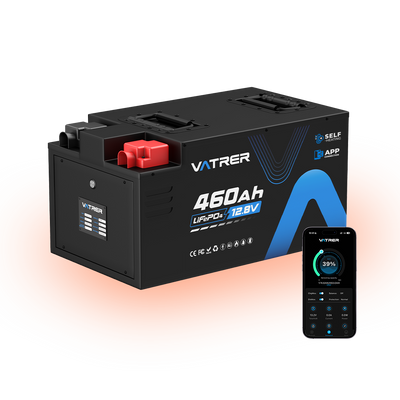
A Group 8D battery is one of the largest common battery sizes used in boats, RVs, commercial trucks, industrial equipment, and backup power systems. It is built for applications that need substantial starting power, extended runtime, or both.
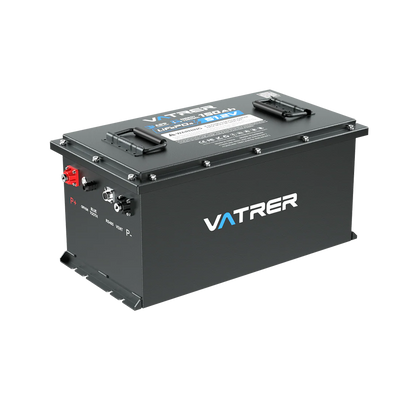
The most important thing to understand is that “Group 8D” describes the battery’s physical size and general terminal layout—not its chemistry or exact performance. You can find flooded lead-acid, AGM, gel, and lithium batteries built in an 8D-size case.
Most traditional Group 8D batteries are 12-volt models measuring approximately 20.75 inches long, 11 inches wide, and 9.75 inches high. Capacity, weight, cranking power, and usable runtime vary considerably depending on the battery design.
Group 8D Battery Specifications at a Glance
| Specification | Typical Group 8D Battery |
|---|---|
| Nominal voltage | Usually 12 volts |
| Approximate dimensions | 20.75 × 11 × 9.75 inches |
| Lead-acid capacity | Commonly 225–255 Ah |
| Lead-acid weight | Often 130–180 pounds |
| Lithium weight | Often 70–100 pounds, depending on capacity |
| Common designs | Flooded, AGM, gel, and LiFePO4 |
| Typical applications | RVs, boats, trucks, industrial equipment, and backup systems |
These numbers are general guidelines. Always check the manufacturer’s data sheet because an 8D case size does not guarantee a particular amp-hour rating, cold-cranking rating, terminal type, or battery chemistry.
What Does “Group 8D” Mean?
Group 8D is a battery-size classification commonly associated with the Battery Council International, or BCI, sizing system. The group number helps buyers and equipment manufacturers identify the approximate case dimensions and terminal arrangement.
It does not tell you whether the battery is intended for starting an engine, running appliances, or performing both jobs. Two batteries can share the same 8D dimensions while having very different internal construction and performance.
- Starting Group 8D batteries are designed to deliver a large burst of current for diesel engines and heavy equipment.
- Deep-cycle Group 8D batteries are designed to provide steady power over a longer period and tolerate repeated discharge cycles.
- Dual-purpose Group 8D batteries balance cranking ability with moderate deep-cycle performance.
Before buying, determine whether your application needs high cold-cranking amps, high amp-hour capacity, frequent cycling, or a combination of these features.
Why Choose a Group 8D Battery?
The main reason to choose an 8D battery is simple: you need more power or runtime than a smaller Group 24, Group 27, or Group 31 battery can normally provide.
- High capacity: A deep-cycle 8D battery can support lights, pumps, refrigerators, electronics, and inverter-powered appliances for extended periods.
- Strong cranking performance: Starting versions can provide the high current required by large diesel engines.
- Fewer battery connections: One large battery may replace multiple smaller batteries, reducing the number of cables and connection points.
- Heavy-duty construction: Quality 8D batteries are designed for demanding marine, RV, commercial, and industrial environments.
- Multiple chemistry options: Buyers can choose flooded lead-acid, AGM, gel, or lithium based on budget and operating requirements.
The tradeoff is size and weight. A conventional 8D lead-acid battery can weigh well over 130 pounds, so installation often requires two people or mechanical lifting equipment.
Common Applications of Group 8D Batteries
RVs and Off-Grid Camping
In a motorhome or large fifth wheel, a deep-cycle Group 8D battery may supply power for lighting, water pumps, fans, control boards, entertainment equipment, and inverter loads. Its large capacity makes it useful for boondocking, although actual runtime depends on the battery’s usable capacity and the RV’s daily energy consumption.
A lead-acid 8D battery should generally not be discharged as deeply as a LiFePO4 model. For example, a 250 Ah lead-acid battery may provide roughly 125 Ah of practical capacity when limited to a 50% depth of discharge. A properly configured lithium battery may provide a much larger percentage of its rated capacity.
Boats and Marine Equipment
Group 8D batteries are frequently used on larger boats for engine starting, house power, navigation equipment, communications, pumps, lighting, and onboard electronics. AGM and lithium designs are popular where reduced maintenance, lower self-discharge, or improved cycling performance is important.
Marine installations must use secure mounting, correctly sized cables, proper overcurrent protection, and equipment suitable for the battery chemistry.
Commercial Trucks and Heavy Equipment
Starting-type 8D batteries can be found in trucks, buses, agricultural equipment, construction machinery, emergency vehicles, and stationary engines. These applications typically prioritize cranking amps, vibration resistance, and reliable cold-weather starting.
Backup and Renewable Energy Systems
Deep-cycle 8D batteries may also be used in off-grid solar systems, telecommunications equipment, emergency backup systems, and other stationary applications. When several batteries are connected together, they must be matched in chemistry, voltage, capacity, age, and condition.
Figure 1.1: Common Applications of Group 8D Batteries

Group 8D vs. Group 31 and Group 24 Batteries
| Battery Group | Approximate Dimensions | Typical Lead-Acid Capacity | Common Uses |
|---|---|---|---|
| Group 8D | 20.75 × 11 × 9.75 inches | 225–255 Ah | Large RVs, marine systems, trucks, industrial equipment |
| Group 31 | 13 × 6.75 × 9.5 inches | 90–125 Ah | Boats, trucks, RVs, trolling motors, backup systems |
| Group 24 | 10.25 × 6.8 × 8.9 inches | 70–85 Ah | Smaller boats, trailers, light-duty backup power |
A Group 31 battery is not similar in physical size to an 8D battery. An 8D is substantially larger and may offer roughly twice the amp-hour capacity of many Group 31 lead-acid models.
However, capacity alone should not determine your choice. A smaller lithium battery can sometimes provide more usable energy than a larger lead-acid battery because lithium supports deeper discharge and maintains a more stable voltage under load.
Flooded, AGM, or Lithium Group 8D Battery?
Flooded Lead-Acid
Flooded batteries are usually the lowest-cost option. They can provide reliable performance but require ventilation, upright installation, terminal cleaning, and periodic water checks. They may release gas during charging and can spill if tipped.
AGM
AGM batteries are sealed, spill-resistant, and generally maintenance-free. They usually handle vibration better than flooded batteries and have a lower self-discharge rate. Their purchase price is higher, and they still carry significant weight.
LiFePO4 Lithium
LiFePO4 batteries are lighter, support deeper discharge, recharge faster, and may deliver thousands of cycles when operated correctly. They require a battery management system and charging equipment with a compatible lithium profile.
A lithium 8D replacement is not always a direct drop-in upgrade. Confirm charger compatibility, alternator charging limits, low-temperature protection, inverter settings, cable sizing, and battery-monitor configuration before installation.
How to Choose the Right Group 8D Battery
- Check the available space: Measure the battery tray, hold-down system, cable clearance, and terminal access.
- Confirm voltage: Most 8D batteries are 12 volts, but the label and equipment specifications should always be checked.
- Match the application: Choose a starting, deep-cycle, or dual-purpose design based on how the battery will be used.
- Compare usable capacity: Do not compare batteries using amp-hours alone. Consider recommended depth of discharge and system efficiency.
- Check cranking requirements: Large engines may require a specific CCA, CA, or MCA rating.
- Verify the charging profile: The charger, converter, solar controller, or alternator system must support the selected chemistry.
- Review weight limits: Confirm that the battery compartment and vehicle can safely support the battery.
- Inspect terminal orientation: Incorrect terminal placement can make existing cables too short or create unsafe routing.
Group 8D Battery Runtime
Runtime depends on usable watt-hours and the size of the electrical load. A 12-volt, 250 Ah battery stores approximately:
12 volts × 250 Ah = 3,000 watt-hours, or 3 kWh of rated energy.
A lead-acid battery limited to 50% discharge may provide around 1.5 kWh before inverter losses. A lithium battery that allows 80% to 90% discharge may provide approximately 2.4 to 2.7 kWh before system losses.
For example, a continuous 500-watt load might run for approximately 2.5 hours on the usable energy of a lead-acid battery or about 4.5 to 5 hours on a similarly rated lithium battery. These are estimates; temperature, battery condition, discharge rate, inverter efficiency, and cable losses affect actual results.
Charging and Maintenance Tips
Use a Compatible Charger
Use a smart charger designed for the battery chemistry. Flooded, AGM, gel, and lithium batteries require different charging voltages and control strategies. An incorrect charger can cause undercharging, overheating, reduced capacity, or premature battery failure.
Avoid Leaving the Battery Discharged
Lead-acid batteries should be recharged promptly after use. Leaving one partially discharged encourages sulfation, which reduces capacity and cranking performance. Lithium batteries do not sulfate, but they should still be stored within the manufacturer’s recommended state-of-charge range.
Inspect the Terminals and Case
Look for loose connections, corrosion, damaged cables, swelling, cracks, leaks, or unusual heat. Disconnect power before cleaning or tightening connections, and use the correct personal protective equipment.
Check Water Levels on Flooded Batteries
For serviceable flooded batteries, inspect electrolyte levels regularly and add only distilled water when required. Never add acid as part of routine maintenance.
Manage Temperature
High temperatures accelerate battery aging. Cold temperatures reduce available capacity and cranking performance. Lithium batteries must not be charged below their specified minimum temperature unless they include low-temperature charging protection or an approved heating system.
Store the Battery Properly
Disconnect parasitic loads, fully charge a lead-acid battery before storage, and check its state of charge periodically. Modern battery cases can be placed on concrete; storage temperature, cleanliness, moisture, and state of charge matter far more than the floor material.
Figure 2.1: Group 8D Battery Maintenance Checklist

Useful Battery Maintenance Tools
| Tool | Purpose |
|---|---|
| Digital multimeter | Checks battery and charging-system voltage |
| Battery monitor | Tracks current, consumed amp-hours, and state of charge |
| Hydrometer | Checks specific gravity in serviceable flooded batteries |
| Terminal brush and cleaner | Removes corrosion from terminals and cable connections |
| Smart charger | Charges and maintains the correct battery chemistry |
| Torque wrench | Tightens terminals to the manufacturer’s specification |
New Group 8D Battery Technology and Market Trends
Traditional lead-acid 8D batteries remain widely used because they are familiar, readily available, and relatively affordable. At the same time, lithium replacements are becoming more common in RV, marine, and off-grid applications.
Modern batteries may include Bluetooth monitoring, internal heating, low-temperature protection, high-current battery management systems, and communication connections for inverters or energy-management equipment.
Sustainability is also influencing buying decisions. Lead-acid batteries have an established recycling network, while lithium manufacturers are increasingly developing recovery and recycling programs. Regardless of chemistry, used batteries should be returned to an approved recycling or collection facility.
FAQs About Group 8D Batteries
Is a Group 8D battery always a 12-volt battery?
Most traditional Group 8D batteries are 12-volt batteries, but the group designation describes case size rather than voltage. Always verify the label before connecting the battery.
How much does a Group 8D battery weigh?
A flooded or AGM Group 8D battery often weighs between 130 and 180 pounds. Lithium versions are usually lighter and may weigh approximately 70 to 100 pounds, depending on capacity and construction.
How long does a Group 8D battery last?
A flooded battery may last roughly three to six years, while a well-maintained AGM battery may last four to seven years. A properly installed LiFePO4 battery may operate for eight to fifteen years or thousands of cycles. Actual life depends on temperature, charging, depth of discharge, and usage.
Can a Group 8D battery be used in an electric car?
A Group 8D battery is not normally used as the main traction battery in a modern electric car. It may be used in specialty equipment or auxiliary systems only when the voltage, chemistry, capacity, and controls are compatible.
Can I replace two Group 31 batteries with one Group 8D battery?
Possibly, but only after comparing voltage, usable capacity, cranking requirements, physical space, cable layout, weight, and charging compatibility. One 8D battery is not automatically equivalent to every two-battery Group 31 bank.
Do Group 8D batteries need ventilation?
Flooded lead-acid batteries require appropriate ventilation because they can release gas while charging. AGM batteries release less gas under normal conditions but still need installation according to the manufacturer’s instructions. Lithium installations must follow the battery and equipment manufacturer’s safety requirements.
Can I charge a Group 8D battery with a regular automotive charger?
Only if the charger supports the battery chemistry and has enough output for the battery’s capacity. A small automotive charger may work but take a very long time. Lithium batteries require a suitable lithium charging profile.
Conclusion
A Group 8D battery is a large-format battery designed for applications that need high capacity, strong cranking performance, or dependable power over long operating periods. It can be an excellent choice for an RV, boat, commercial vehicle, heavy machine, or backup power system—but only when its chemistry and performance ratings match the job.
Before purchasing, verify the battery’s dimensions, voltage, terminal layout, amp-hour capacity, cranking rating, weight, charging requirements, and recommended operating temperature. Choosing by the “8D” label alone is not enough. The right battery is the one that fits your equipment physically, electrically, and operationally.
Share